One platform,
three kinds of user.
To buy a house is not one job. A buyer searches, saves and calculates what they can afford. An agent controls listings and follows leads. An administrator must see all of it. These are three different products on one database. Most of the work went into the separation between them.
Three portals, not three apps
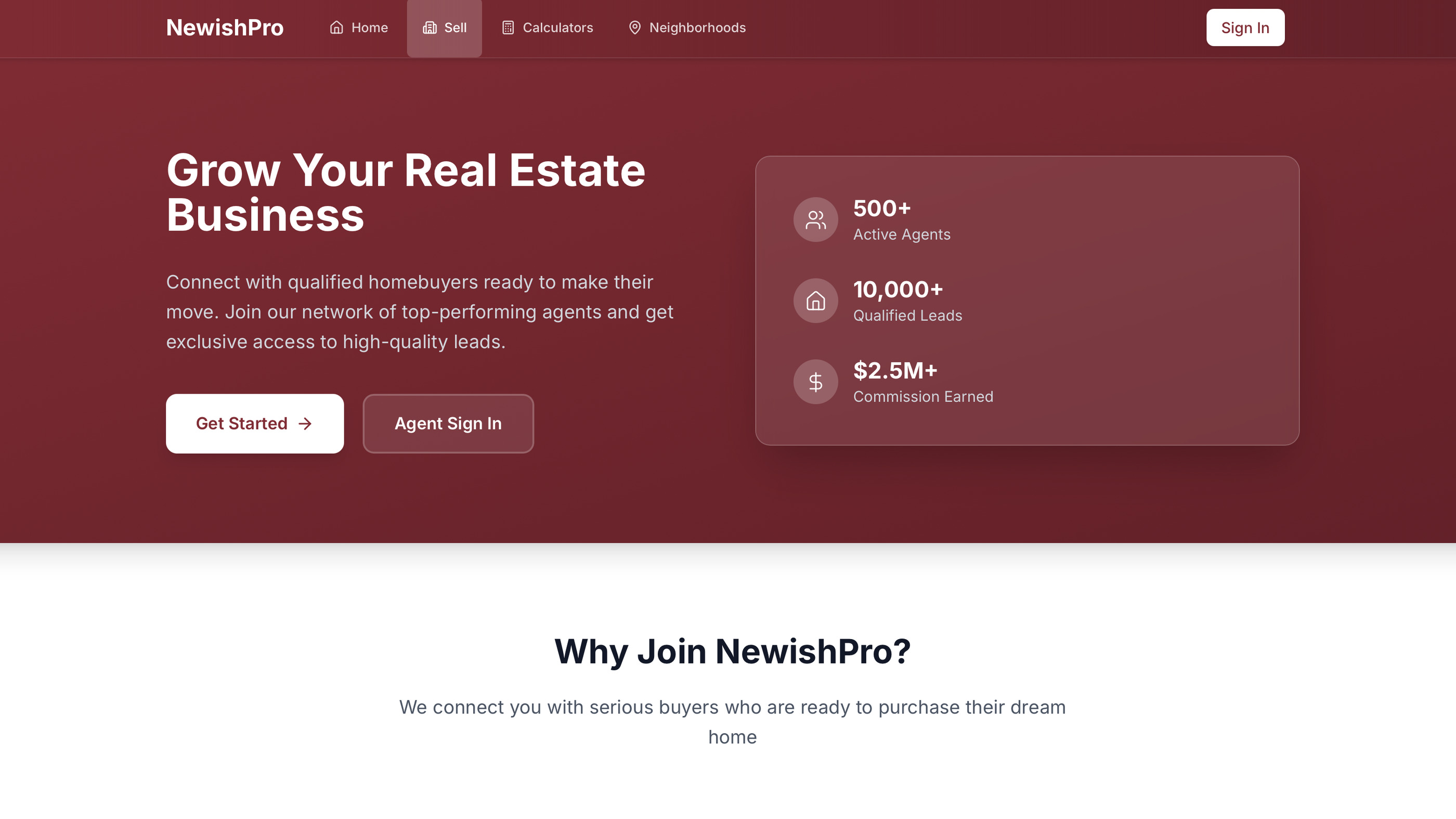
The platform has a user zone, an agent portal and an admin dashboard. Each one has its own route group, its own layout and its own authentication boundary. All three run as one Next.js application on one Supabase project.
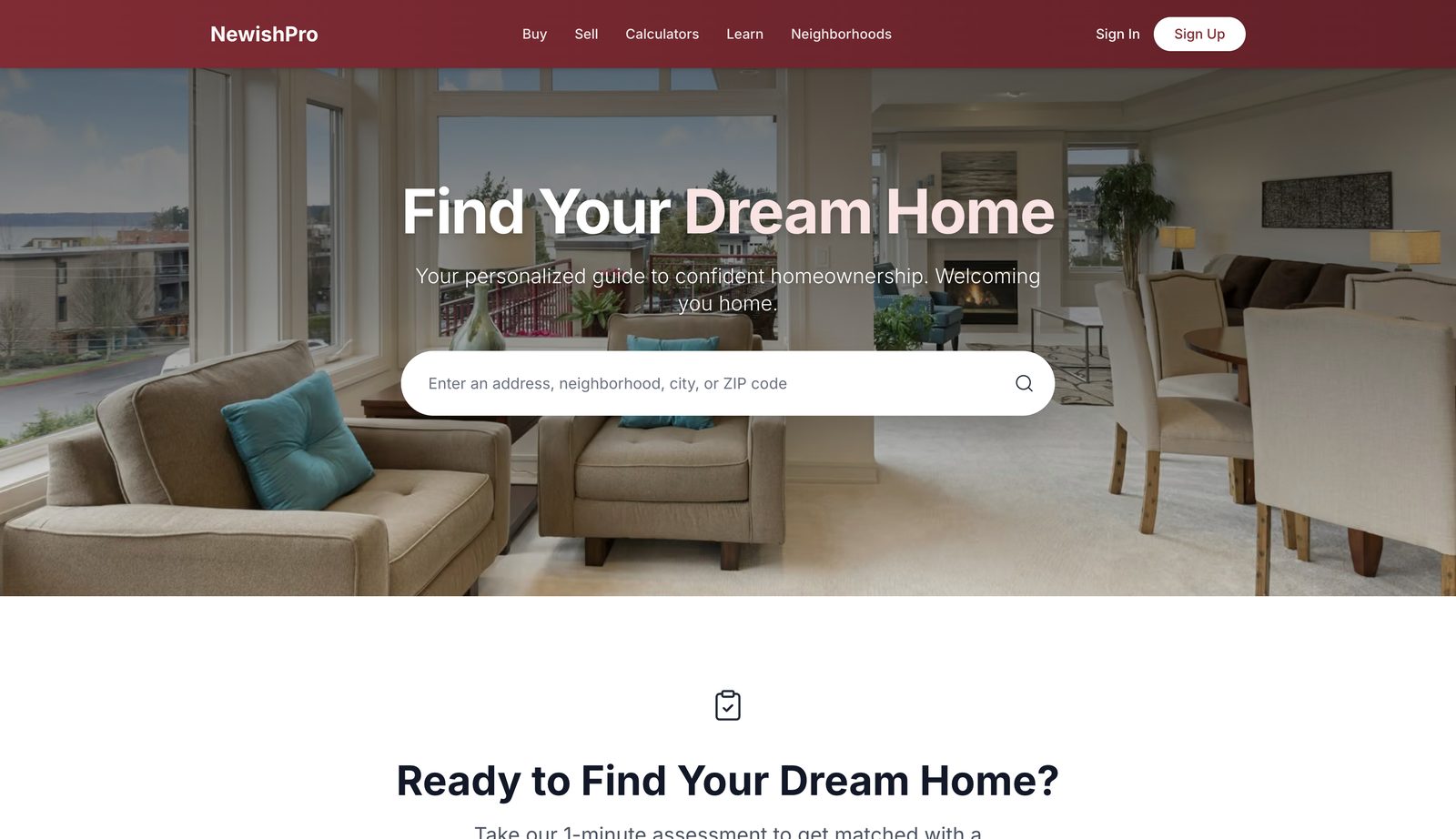
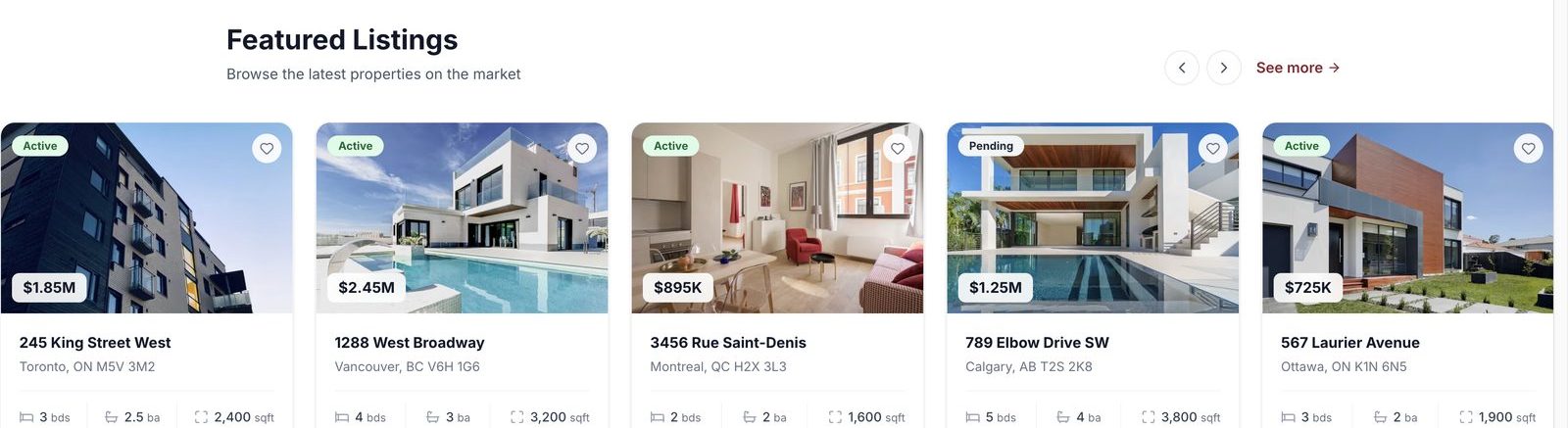
Buyers get property search, saved listings, the calculators, the assessment and the courses. Agents control their listings, their leads and their profile. Administrators supervise properties, agents and leads. No person sees the wrong portal.
Security in the database, not the interface
The easy method hides the admin buttons and hopes that no person finds the URL. That is not security. One direct request still returns the data.
PostgreSQL row level security controls access. Each table has policies that decide, for each row, who can read it or change it. The policies apply to every query, whatever part of the application sent it. If a buyer requests the saved properties of another buyer, the list is empty. It is empty because the database refused, not because the interface removed the rows.
If the front end controls permission, each new screen and each new endpoint must repeat that control correctly. Row level security applies one time and stays correct for all later code.
Calculators people will actually finish
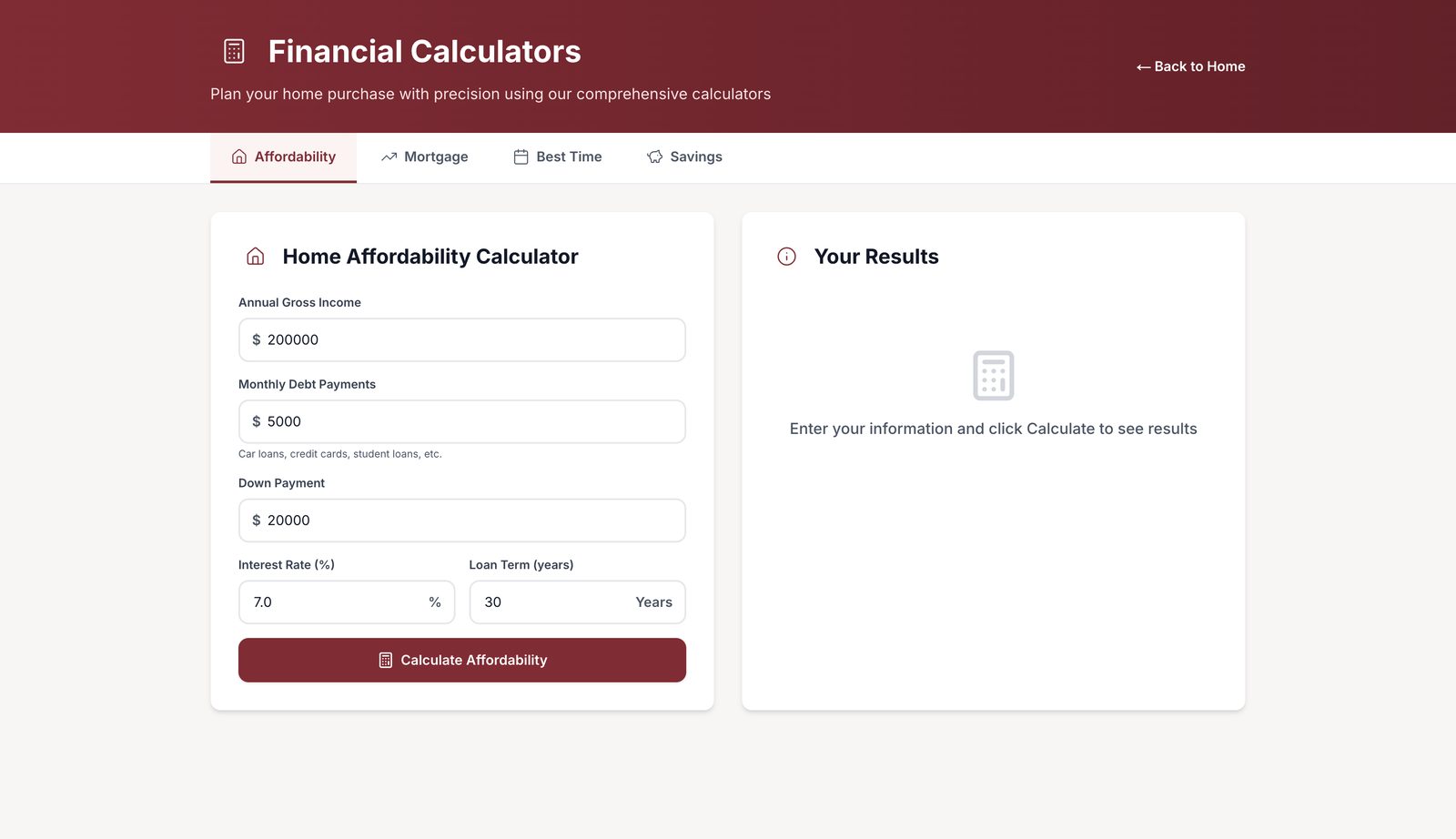
One set of tabs holds four calculators: affordability, mortgage, best time to buy, and savings. The affordability calculator uses gross income, current monthly debt, a deposit, an interest rate and a term. That is enough data for a correct answer.
The platform saves each result to the user account. A buyer who calculates in March can compare that result in June, and does not enter the data a second time.
Teaching, not just listing
The platform includes a course system with quizzes, progress records and scores. A first-time buyer makes the largest purchase of their life, and the vocabulary is new to them. A word list does not correct that, but a course does. The platform stores progress for each user, so a person can stop and continue later.
The shape of the data
Six core tables carry the platform, each tied back to a Supabase Auth identity:
| Table | Holds |
|---|---|
| UserProfile | Extended user data linked to the auth identity |
| UserPreferences | Notification and search configuration |
| SavedProperty | Properties a buyer has bookmarked |
| CalculatorHistory | Saved snapshots of affordability and mortgage runs |
| CourseProgress | Progression and scores through the course system |
| QuizAttempt | Quiz outcomes, linked to a specific course |
The schema is small on purpose. Each table exists because a function needs it, and each one holds the security policies that control access to it.