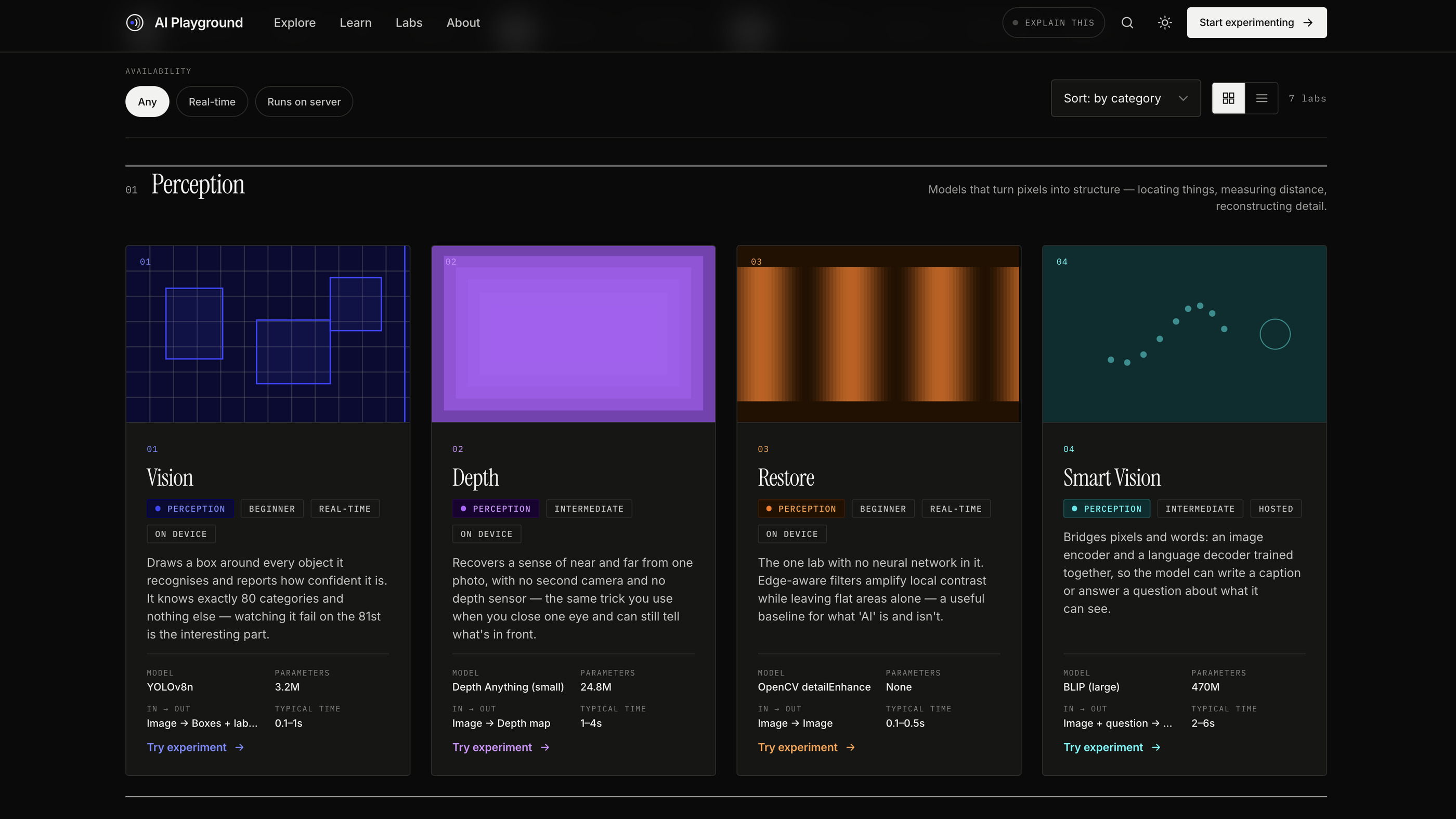
Seven models.
Running for real.
Not a recording. Four models run in your browser and three on a server, giving visitors a responsive playground that makes each model's limits visible.
7Working models across four capability families
10.9BParameters combined, every model named in full
4Run on the visitor's own device
0Accounts, and nothing stored on a server
Two places to run a model.
Chosen per model.
A 3.2 million parameter detector runs locally and answers instantly. A 7.24 billion parameter language model cannot. The split is what keeps it fast and keeps the bill predictable.
Nothing is stored,
so nothing needs protecting.
No account, no login, no server-side record of anything a visitor uploads. That removed an entire class of work.
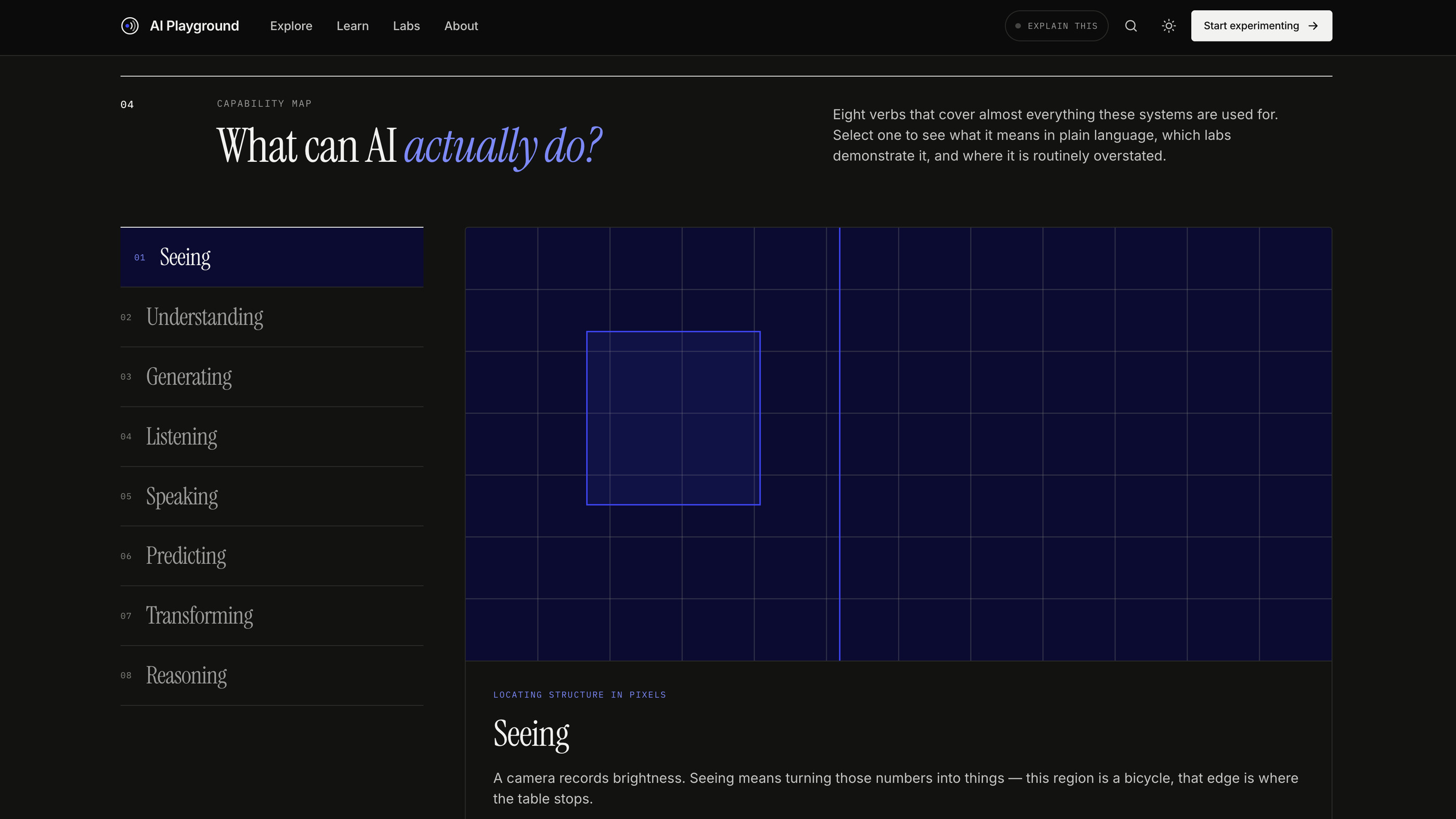
One image.
Four ways of looking.
A detector, a depth estimator, a filter and a captioner, all on the same photograph, all calling the same endpoints the full labs use.
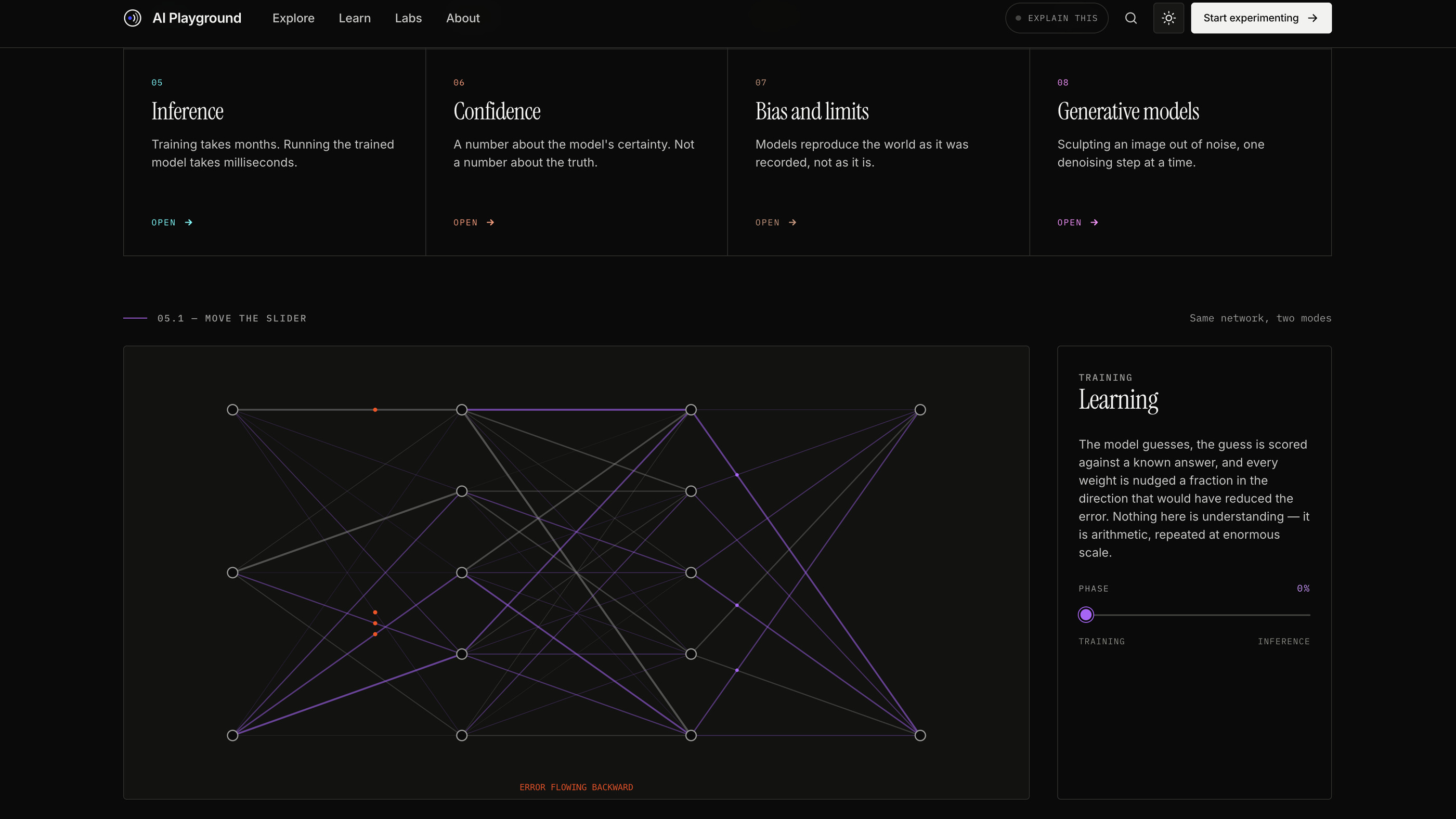
A model that is confidently wrong
looks exactly like one that is right.
So every lab reports its own limits beside its result. The detector knows eighty categories. The depth map has no unit. One lab has no neural network at all.
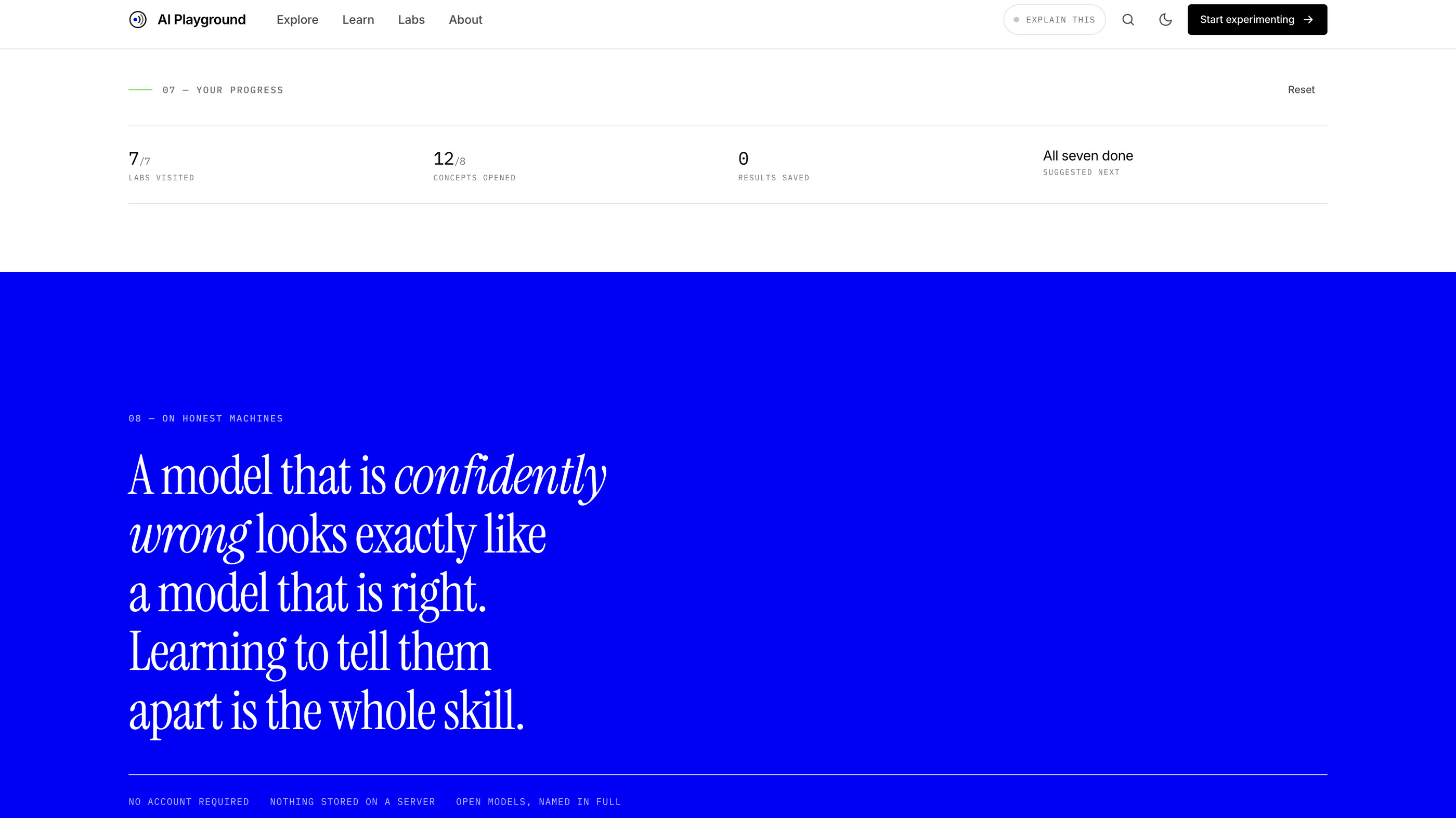
ClientHangst
BuiltInteractive AI exhibition, seven live models
ModelsYOLOv8n, Depth Anything, BLIP, Zephyr 7B, Whisper, SDXL